
You ask an inexperienced photographer, "Is there enough light?" The question you need to ask an experienced one is this: "Where is the light coming from?" In photography, light direction is the most silent yet most decisive parameter that determines the emotion a scene carries. The exposure can be correct, the composition clean, the subject strong, yet if the light comes from the wrong direction, the photograph cannot tell you what it needs to tell you. In this article, I cover the anatomy of light from front light to back light, from Rembrandt setup to silhouette, within both a technical and emotional framework, from the very beginning.
Light Is Not a Rule, It Is a Decision
Much has been written about light's role in photography. Most sources offer you suggestions like "shoot during golden hour," "avoid harsh sunlight," "use a diffuser." These are not wrong; but they are incomplete. Because the real question is not this: is the light good or bad? The real question is this: which direction is the light facing, and what does that direction tell?
Which surface is lit in a scene, which remains in shadow... this single choice builds the emotional foundation of the photograph. If a face is lit directly from the front, it appears as though it hides nothing. When the same face is shot with 90-degree side light, it evokes the feeling that the character has a secret. When shot in backlight, the figure becomes shrouded in ambiguity of meaning; not who they are, but what they mean comes to the fore.
Light direction does not merely illuminate the scene; it visually builds a psychology.
Front Light: Unmasked Faces and Flat Reality
The light source is directly in front of the subject, behind the photographer. If the sun is behind you or the studio flash is right next to the camera, you are getting front light. Shadows are minimized, texture nearly disappears; the face or object appears flat and readable, giving the impression that it hides nothing. This transparency becomes a deliberate choice in formal portraits, product catalog shoots, and some documentary work. You want to be objective, to remain neutral. But this same quality is its greatest weakness. Form disappears, depth is erased, a round face looks two-dimensional. Sometimes that is exactly what you want. But if you are looking for drama, this light gives you nothing.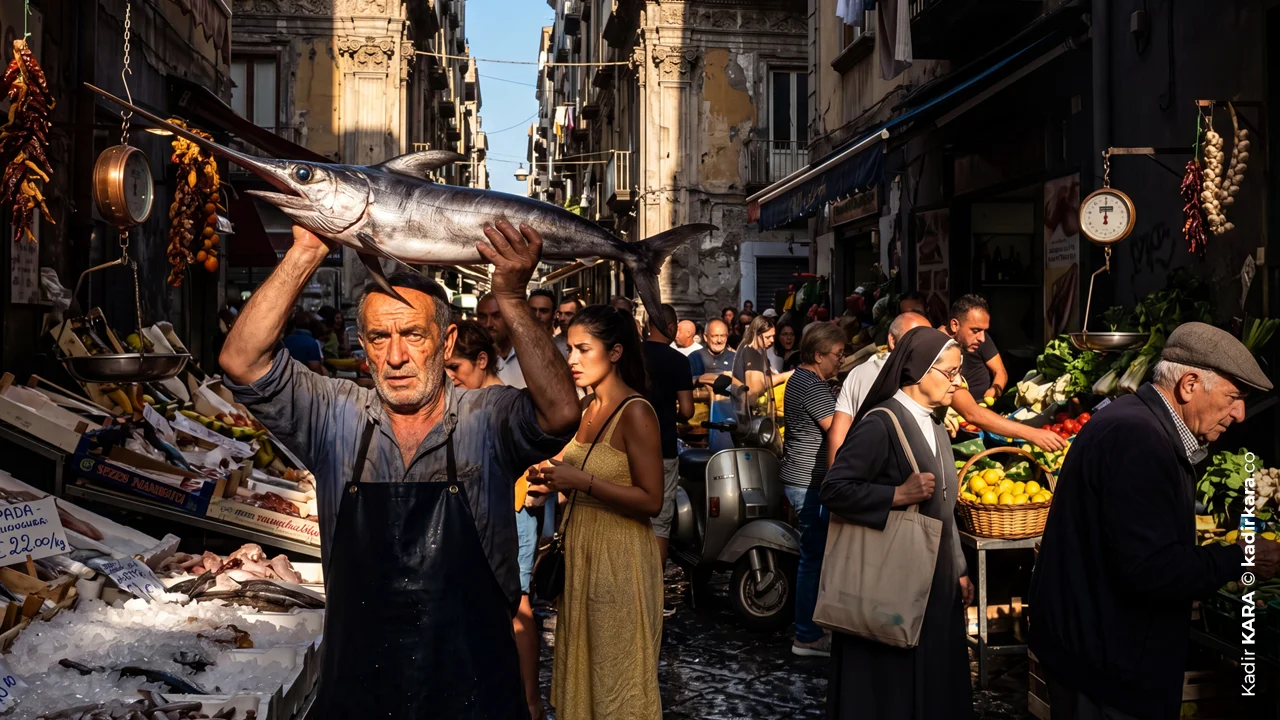
Side Light: Dramatism, Texture, and the Legacy of Chiaroscuro
The light source comes directly from the left or right of the subject, at a 90-degree angle. A sharp boundary forms between the lit half and the dark half of the face, texture suddenly emerges — the pores of skin, the surface of stone, the weave of fabric, the bark of a tree... That is why in landscape and architectural photography, side light has become the standard method for conveying three-dimensionality. But its true power emerges in what it does to a human face. A face that is half lit and half in darkness is a universal symbol of duality. The viewer reads this intuitively. This person has both an open and a hidden side. This is why side light is so dominant in every narrative containing tension, inner conflict, and power.
Caravaggio and Rembrandt used this contrast — chiaroscuro, meaning "light and dark" in Italian — to give psychological weight to the figures remaining in their works. Photography inherited this legacy directly. In Rembrandt light, a specific variation, the source is positioned approximately 45 degrees above and to the side of the subject. A small triangular patch of light appears on the cheek of the darker half of the face. This triangle, whose upper corner forms at the lower edge of the eye and lower corner at the level between the cheek and mouth, gives the human face both form and mystery, both power and vulnerability, simultaneously. It remains to this day one of the most frequently used classic setups in portrait photography.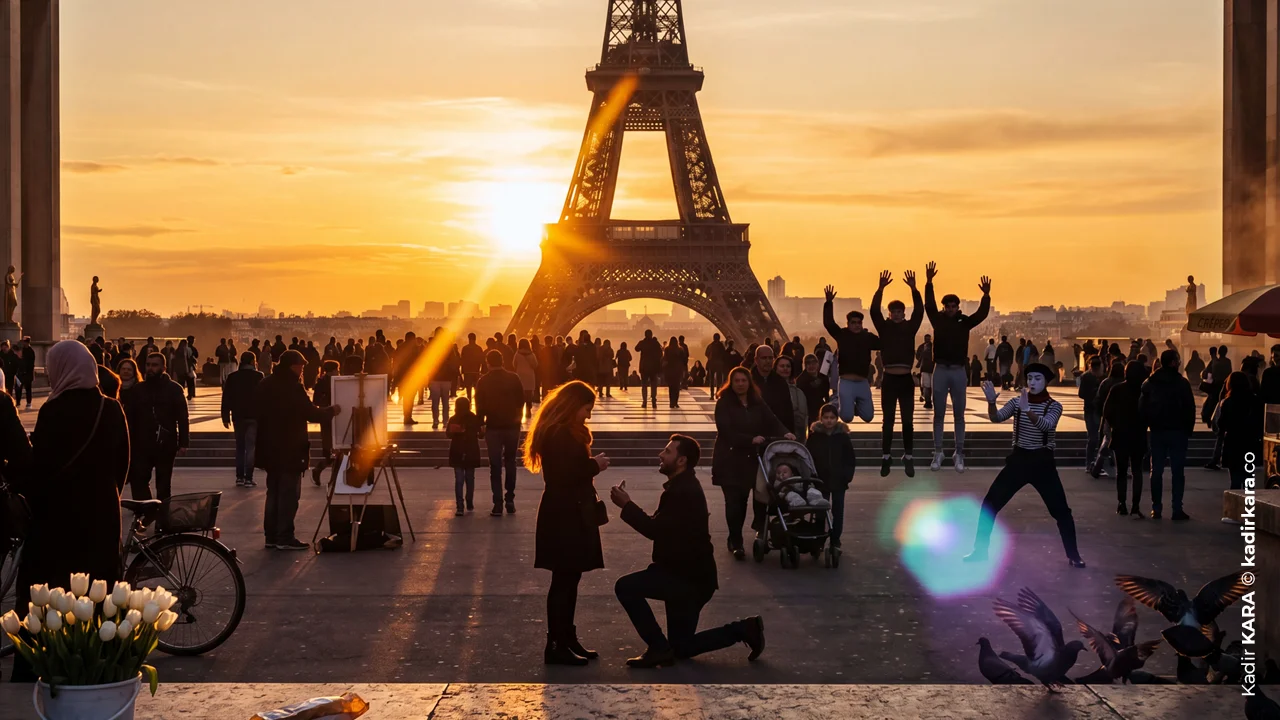
Back Light: Mystery, Separation, and Ambiguity of Meaning
The light source is behind the subject, facing the photographer. This positioning produces different results depending on the strength and angle of the light. If the source is strong but soft — low and warm as in golden hour — a golden halo forms around the edges of the hair and shoulders. The emotional tone is hope, freedom, spirituality. If you shoot the same person with front light, you get a documentary photograph; when you shoot them with back light, that person transforms into a symbol of something. If the light source is direct and harsh, the figure is pushed into silhouette. The face disappears, identity retreats, only the outline remains.
Silhouette is the moment the photograph wants to convey a concept rather than an individual; with this shooting technique, you see the symbol, not the person. Among these, there is also Rim Light; the edges of the figure are lit with a bright line, but the front surface remains in darkness. It separates the subject from the background, making it independent and weighty. When working with back light, the ray entering the lens sometimes creates lens flare, that is, light scattering. This effect, considered a technical flaw for many years, has today become a deliberate part of cinematic aesthetics. Warmth, nostalgia, and the feeling that "this moment truly happened" are made possible with this technique.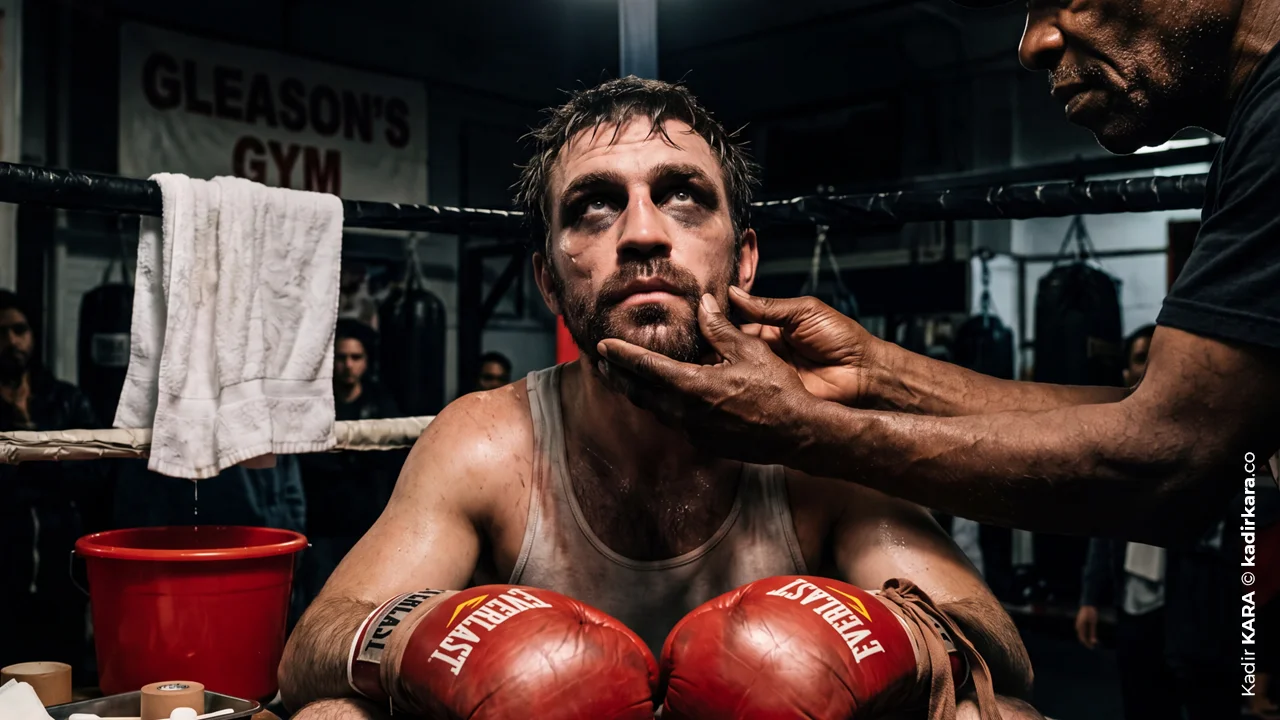
Light from Above: Power, Pressure, and Harsh Truth
The light source comes directly from above. Harsh shadows fall under the eyes, below the nose, and below the chin; for this reason it is also referred to as "Skull Light." When used incorrectly, this technique can make a face appear harsh, aged, even skeletal, but a controlled, slight overhead angle (Butterfly Light) emphasizes the cheekbones, adding sharpness and structural beauty to the face. This technique gets its name from the small butterfly-shaped shadow formed under the nose and is frequently used in fashion photography. As the overhead light becomes more direct and harsh, the emotional tone shifts. Judgment, entrapment, pressure. That is why in interrogation scenes or at the moments when a character reaches their breaking point, directors frequently use a single overhead light. The character is both physically and metaphorically under the weight collapsing upon them.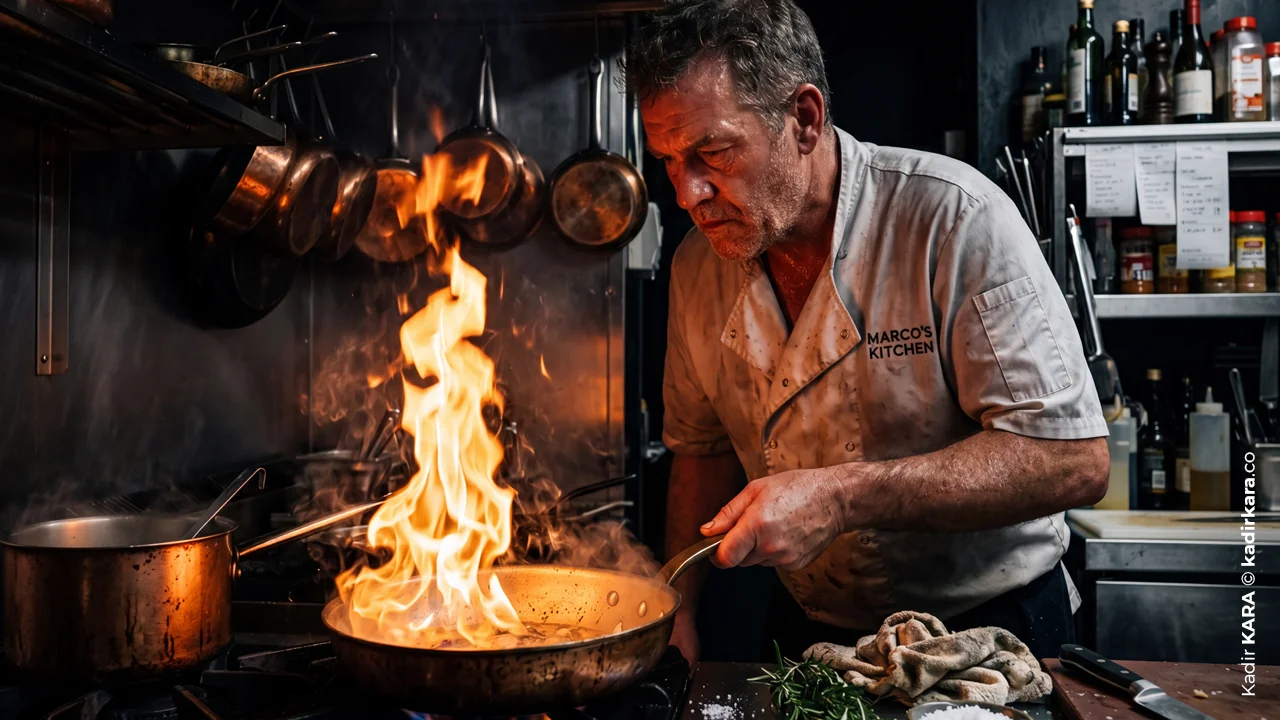
Light from Below: Fear and the Grammar of the Supernatural
Light rises from below — Footlight or Under Light. It creates discomfort in people in an almost universal way, and the reason for this is not intuitive but neurological. In nature, light always comes from above — like the sun, the moon... The brain has learned to recognize faces with this top-to-bottom light map.
With light coming from below, the forehead remains in shadow, the area beneath the eyes is lit, the map reverses, and the brain generates the signal "I cannot recognize this face." This feeling of unrecognizability is the foundation of why horror films and gothic aesthetics have been resorting to this light for decades. Even an innocent person can appear threatening when lit from below. It is the method that produces the most effect with the least equipment for distinguishing supernatural beings or villainous characters from ordinary people.
Light Direction and Light Quality: A Combination Map
Light direction alone does not determine everything; when combined with the quality of light (harsh or soft), the picture is complete. The combination of these two parameters offers a much more nuanced emotional map.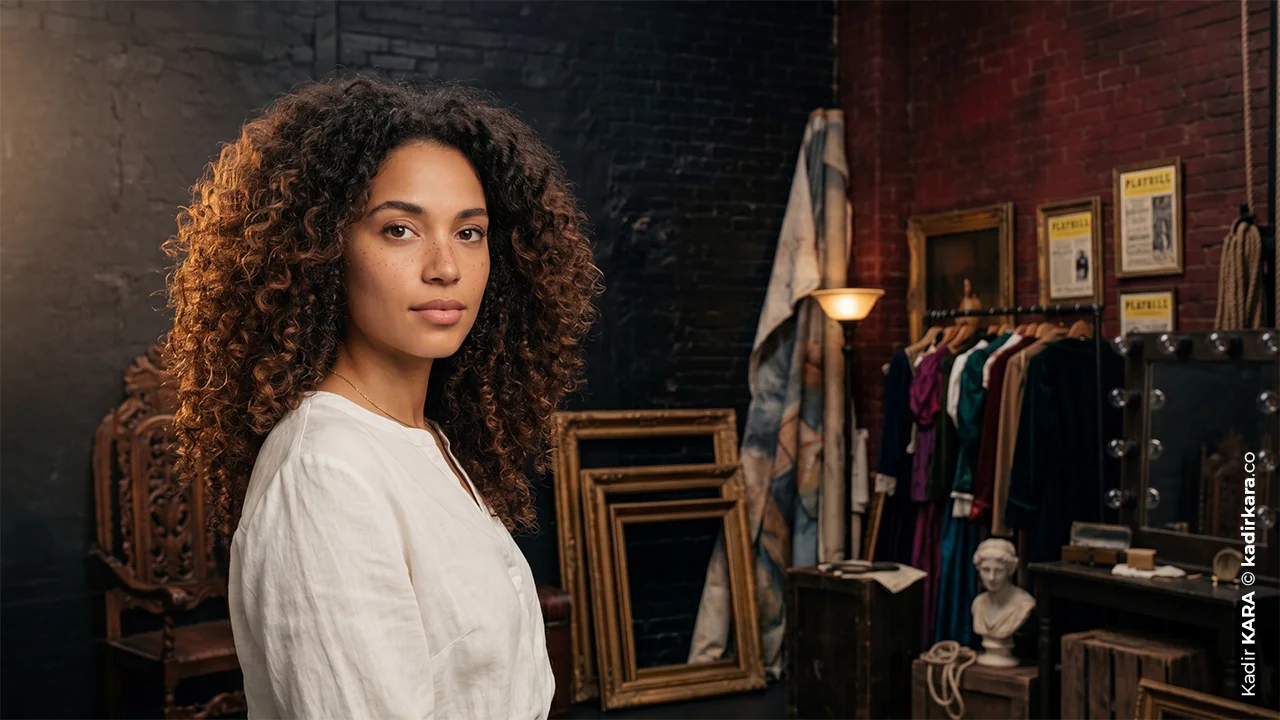
Soft Side Light:
Think of someone sitting in a room in the morning hours with the window curtain drawn halfway: light is coming through the window, but not directly; glass, curtain, perhaps a little cloud is filtering the light. One half of the face is lit, the other is gradually darkening; there is no sharp line between them, only a soft transition. Its technical equivalent is diffused window light or a large softbox; its emotional equivalent is warmth, humanity, vulnerability. The texture of the skin becomes visible, but this visibility is not aggressive. It is not a revelation, it is a confession. Masks fall in this light, but gently.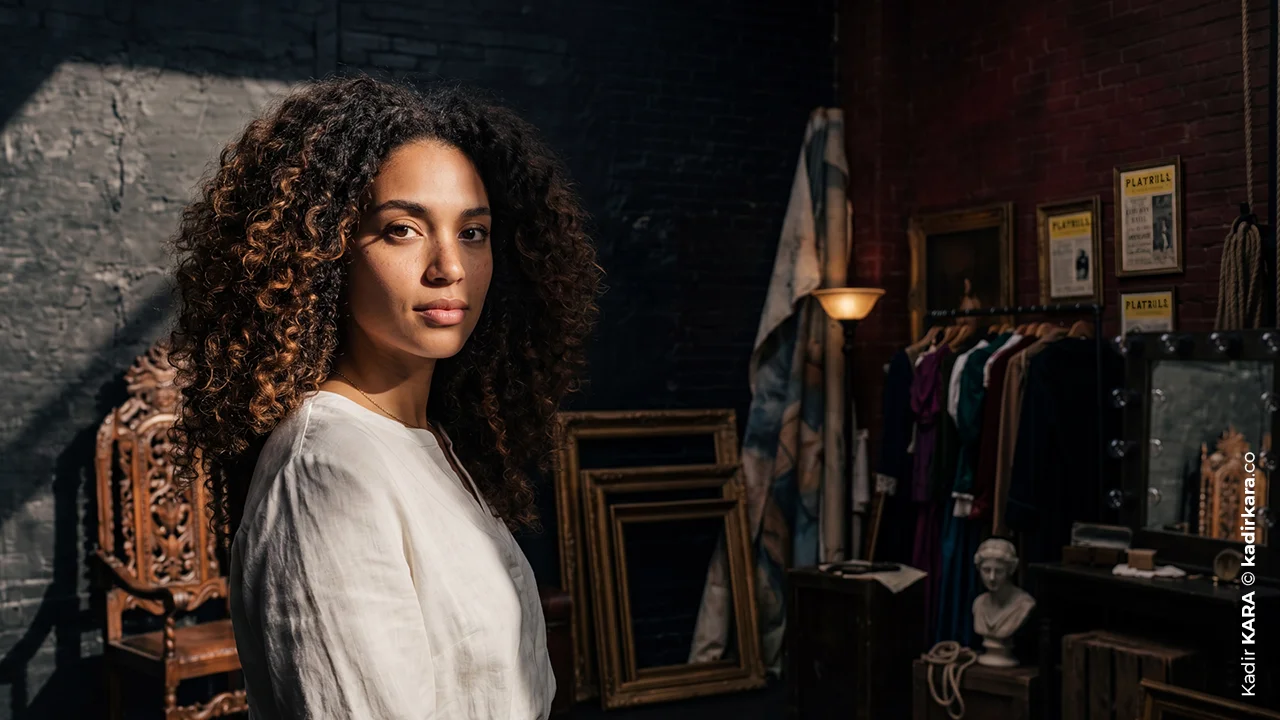
Hard Side Light:
Think of the midday sun. No cloud, no diffuser, nothing intervening. When light strikes from the side directly and mercilessly, the shadow is cut like a knife. There is no negotiation between the lit half and the dark half of the face; the boundary is clear. Its technical equivalent is direct sunlight or a studio flash without a reflector; its emotional equivalent is tension, fracture, power. The same face says "they were being themselves" in soft side light, while in hard side light it says "they are hiding something inside." That is why, depending on context, this light can carry both power and menace, both determination and evil. It is not the light but the scene that decides which it is.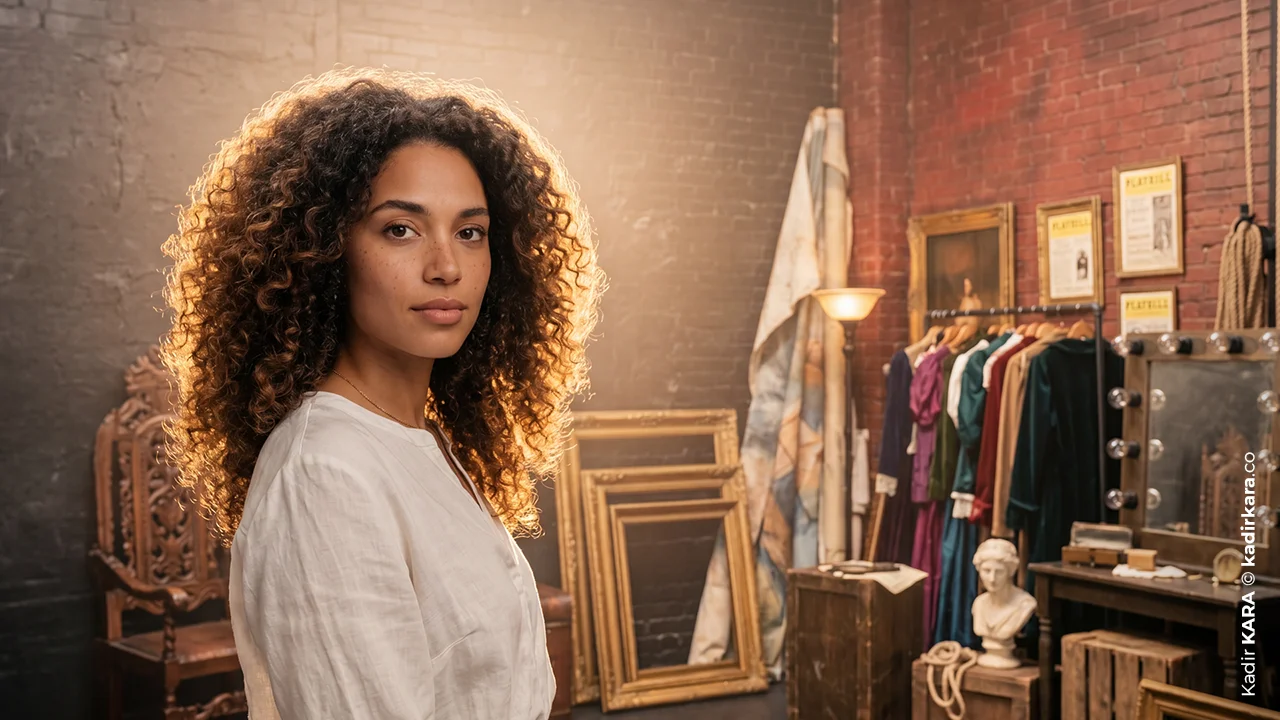
Soft Back Light:
Think of someone outside at sunset. The sun is directly behind them, low and weary, the light warm and golden. The edges of their hair are glowing, there is a faint halo on their shoulders. Their face is in shadow, but the figure glows almost of its own accord. This is the description of Golden Hour, and the purest form of soft back light. The light source is behind, but not harsh. The low angle and the filter of the atmosphere have softened and spread it. Its emotional equivalent perfectly aligns with this softness. Romanticism, hope, and nostalgia. The figure is defined but transcendent; real yet simultaneously legendary. If you shoot the same person with front light, you get a documentary photograph. When you shoot them with back light, that person transforms into a symbol of something.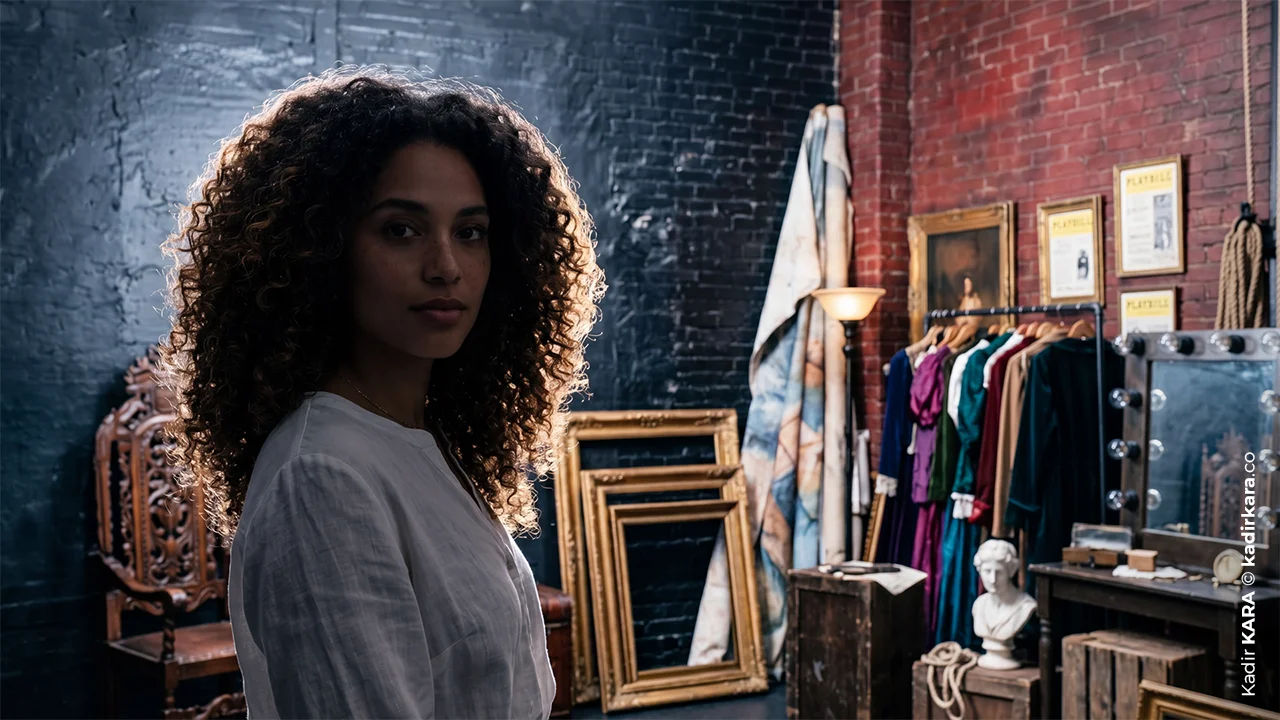
Hard Back Light:
Set aside the romantic halo of soft back light. The light source is behind, but this time direct, straight, and merciless... no atmosphere intervenes, the light does not spread, it only strikes. The result is clear: the figure is pushed into silhouette, face and detail disappear, only the outline remains. Its emotional tone reflects this harshness; dramatic but distant, powerful but cold. Soft back light brings you closer to the figure; hard back light places glass between you. The viewer sees the figure but cannot touch it; this distance is sometimes exactly what you want. When you want to convey mystery, strangeness, or inaccessibility, no other light can say so much with so little.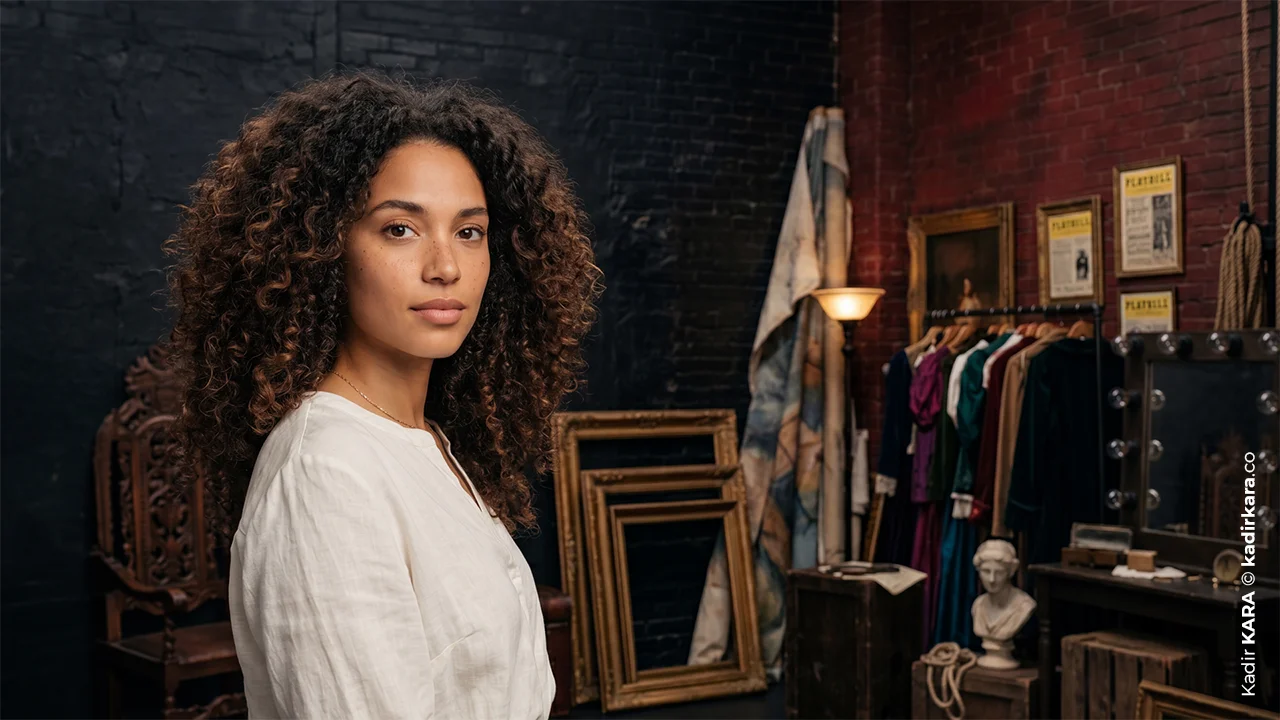
Soft Front Light:
You notice it when you go outside on an overcast day. Everything is visible but nothing is striking. No shadow, no texture, no depth... light comes equally from everywhere, illuminating everything equally. This is soft front light in its natural state. Its studio equivalent is a large diffuser or a soft source placed directly in front of the subject. Technically it is a "clean" light; exposure is easy, there is no shadow problem, every detail is visible. But precisely for this reason it is emotionally silent. Neutral, objective, impartial. It is the moment when the photograph says nothing, only shows. Sometimes this is exactly what you want: you want the viewer's attention on the subject, not on the shadows. But if you are looking for drama, this light gives you nothing, because it has no shadows to hide.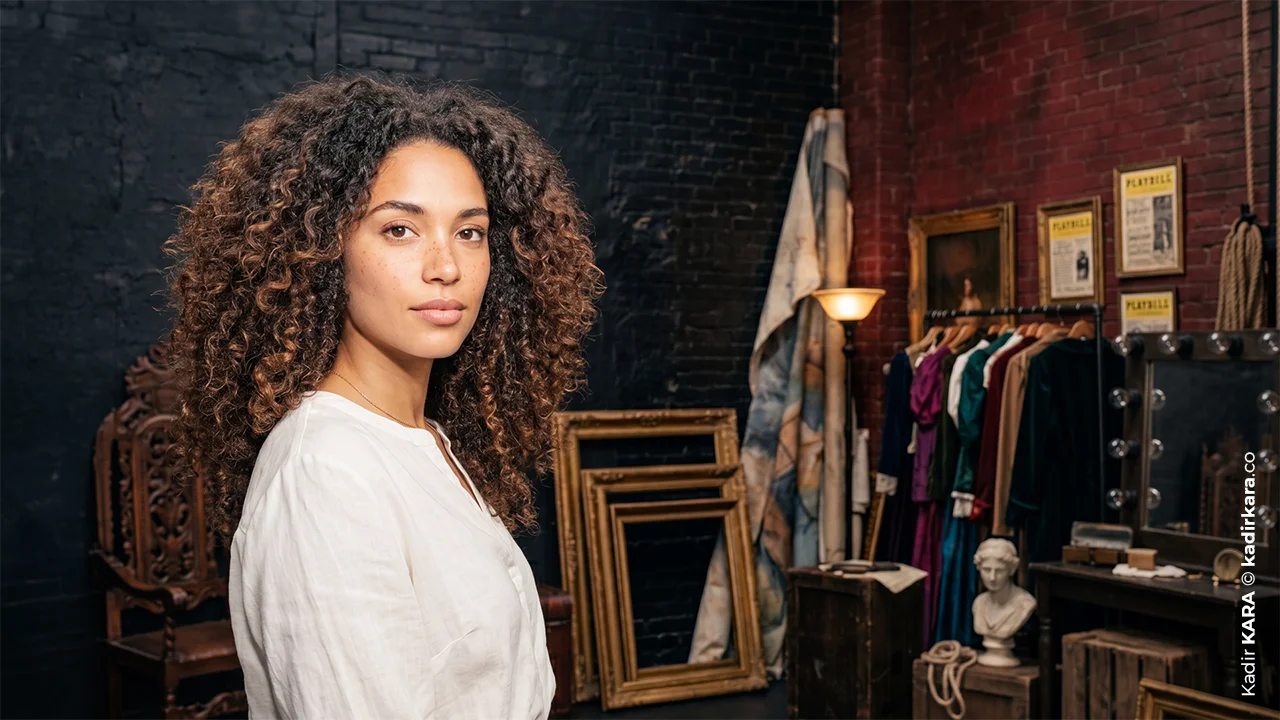
Hard Front Light:
You know the news photographs in newspapers. A face in an earthquake zone, someone leaving a midnight press conference, a moment caught in the middle of the street. The flash has fired directly from the front, there is almost no shadow, the light has struck the face flat just as it is. It appears aesthetically "raw"; it has no intention of softening anything. This is the most familiar form of hard front light. A direct flash attached to the camera, or a source placed directly in front of the subject, without a diffuser. Its emotional tone aligns with this raw energy — instantaneous reality, documentary honesty, the attitude of "I am not here to make this scene look beautiful." Sometimes this neutral harshness is exactly what is needed. To make it feel as though the photograph carries no artistic concern, that it is only bearing witness. You are not looking for beauty, you are looking for evidence.
Each combination carries a distinct emotional color. Thinking only of direction or only of quality is seeing only half of the picture.
Light Direction in Cinematography: Reading the Scene
When you carry photography into the language of film, light direction becomes a narrative tool. There are established practices in cinematography that have persisted for decades and are read unconsciously by the audience.
The character standing on the lit side of the screen generally represents good, while the character remaining in darkness represents evil. This reading is so deeply ingrained that the viewer often makes this interpretation without even being aware of it.
When half of a character's face is shown lit and the other half in darkness — that is, in a Rembrandt-like lighting — their inner conflict is conveyed intuitively. The viewer feels that they can be both good and evil.
If the light a character receives changes throughout the story, this is not coincidental. A good cinematographer uses this deliberately. A powerless, cornered character is lit from above; that feeling of pressure appears as though it has physically collapsed upon them. As the same character gains power, they begin to be framed with back light; the edges of the figure now glow, they have a weight of their own. This is not a written rule, but it is a language that every cinematographer who uses light as a narrative tool instinctively resorts to.
These readings are not objective technical rules; they are habits that come from visual culture. But if the photographer or director knows this code and uses it deliberately, they are establishing a wordless communication with the viewer. The language of photography is, to a great extent, built upon these wordless agreements.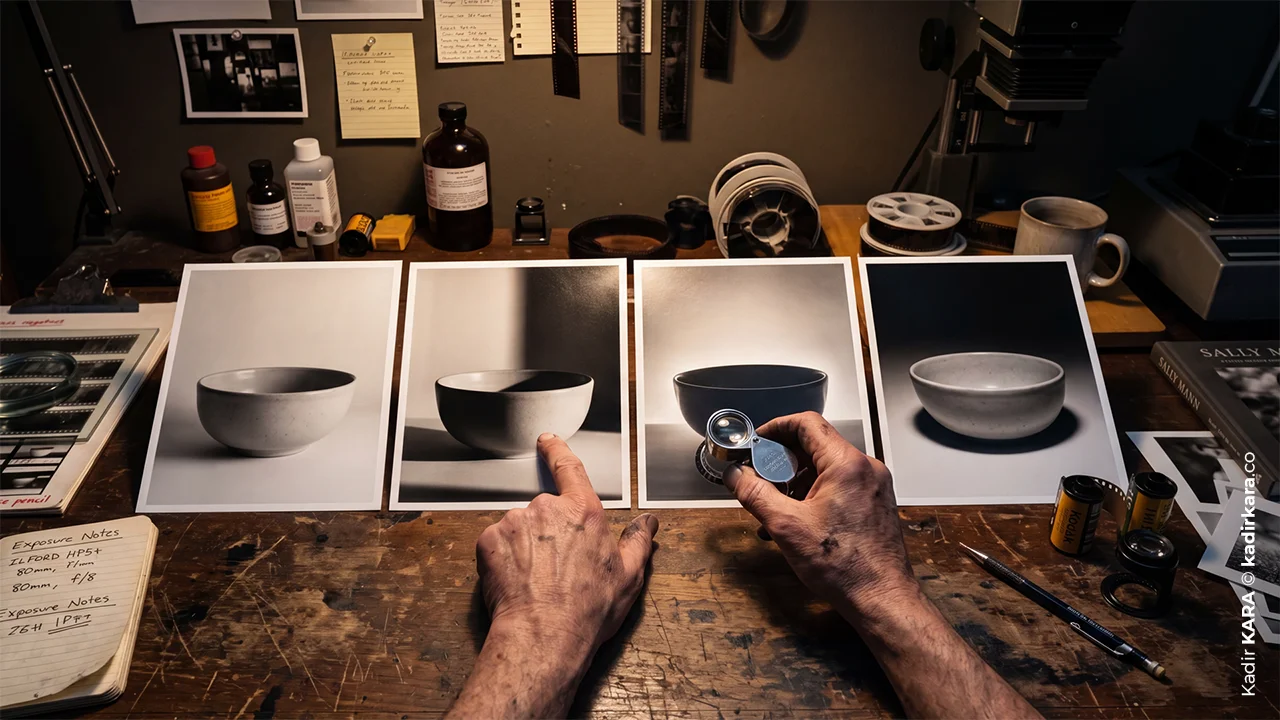
Practical Guide: Shoot the Same Subject in Four Directions
This needs to be done rather than said. In your next shoot, you can try this:
Same subject, same exposure, same frame — but move the light source to a different direction each time. Shoot from the front, from the left side, from behind, and from above. Look at the results.
Every photographer who does this exercise thinks beforehand, "Does the direction of light make that much difference?" and upon looking at these four photographs, sees the answer with their own eyes. Shadow is not merely the place light cannot reach. It is something the photographer says about that scene. Where it falls, how dense it is, what it covers... all of these are decisions.
For the photographer, the question of where the shadow falls is as important as what the photograph they take wants to say.
A BRIEF NOTE
I have been in this business for 18 years, and one of the things that still excites me most is seeing how moving the light completely rewrites a scene. In a shoot, at the moments when the director asked for "a little more drama," turning to the camera crew and saying "move the light one meter to the left" has yielded faster results than hours of script discussions. You might find this sentence overly dramatic, but once you try it, you understand what it's about and you never forget it again.
I wanted to write this article because light direction is passed over as a technical heading in photography training. Yet this is not a technical subject; it is a subject of psychology. What will you illuminate? What will you leave in shadow? This question applies not only to light; it applies to every narrative decision. You ask the same question in the text you write, in the scene you construct, in the visual hierarchy you design.
Photography asks this question with light, and the answer is hidden where the shadow falls.
DID YOU KNOW? - 9 QUESTIONS 9 ANSWERS
1. Where does "Rembrandt light" get its name, and did Rembrandt truly use this lighting consciously?
Yes, he used it consciously. Rembrandt van Rijn, in his self-portraits and in many of his works with models, positioned the light source approximately 45 degrees above and to the side of the subject, creating a small triangle of light on the darker half of the face. The upper corner of this triangle forms at the lower edge of the eye, and the lower corner at the level between the cheek and mouth. The consistent repetition of this arrangement across dozens of his works reveals that this lighting was a deliberate narrative choice on his part. The fact that it bears his name today is the direct result of this consistency.
2. Why is flat light considered "bad light," yet some photographers deliberately choose it?
Flat light reduces emotional tension to near zero; drama, texture, and depth weaken. For this reason, creative portrait photographers generally avoid it, but some photographers — particularly in documentary and conceptual fashion photography — want precisely this neutrality: to direct the viewer's attention to the subject, the costume, or the narrative rather than to the shadows, flat light becomes an advantage. The issue is not "good light / bad light"; it is whether the light is aligned with what you want to express.
3. Why does silhouette photography create such a universally powerful effect?
Because silhouette erases identity and foregrounds form. When the brain reads a silhouette, it asks not who but what. This ambiguity creates a desire for completion in the viewer. Everyone can see themselves, a memory, or an archetype in that figure. This universalizing effect makes silhouette powerful for conceptual or emotional narratives rather than individual stories. You convey not the person, but the concept.
4. Why did lens flare in back light move from being a "flaw" to becoming an aesthetic choice?
In digital photography, lens flare gives the signal "this was shot in a real moment, flawed and not perfect." In other words, it carries the trace of authenticity and immediacy. It also adds warmth and nostalgia to the image. Artificially adding flare in post-production has also long been a common practice. The transition from accident to aesthetic also runs parallel to the problem of images looking "too clean" and "too perfect" in the digital age.
5. Why is midday, when the sun is directly overhead, considered "dead light" by landscape photographers?
Because in overhead light, shadows drop to a minimum and form information disappears. The horizontal shadows that show the three-dimensionality of mountains, valleys, and sand dunes vanish. During Golden Hour, low-angle light reveals this form. Midday light, however, flattens the surface. It adds no depth for landscape. Against this, in architectural or abstract photography, the high contrast created by the midday sun can be used deliberately.
6. Why does light projected from below appear disturbing to everyone?
The human face recognition system operates on the assumption that light comes from above. Forehead lit, eye sockets slightly shadowed, small shadow beneath the nose... this is our "normal face" map. With light coming from below, this map reverses: the area beneath the eyes is lit, the forehead remains in shadow. The brain processes this as "I cannot identify this, it may be dangerous." This neurological response is the foundation of why horror cinema has been using this light for decades.
7. Why does rim light (edge light), while separating the figure from the background, connect the viewer more to the figure?
Rim light makes the figure independent in its own space, saying "I am here, I am a separate entity." This separation is paradoxically attention-drawing. It is isolated, but for exactly this reason it does not escape the eye. It enables the eye to focus on the figure independently of the background. Rim light is particularly effective in implying the balance of power or emotional distance between two figures.
8. How can a photographer without studio facilities bring light direction under control with portable equipment?
A portable reflector or a small LED panel is the most practical method for managing the direction of natural light. The reflector functions as fill light by reflecting natural light. The LED panel provides additional directional light. But before tools comes the choice of position. Changing the subject's angle relative to a window or open area, using the reflection of a wall or floor — these are options that should often be discovered before purchasing equipment. Natural light cannot be controlled, but you can position yourself in relation to it.
9. What exactly does the word "chiaroscuro" mean, and what is the equivalent of this technique in photography?
In Italian, "chiaro" means bright, and "oscuro" means dark. Chiaroscuro, formed from the combination of these two words, is the technique in art of using light and shadow together in a way that creates dramatic contrast. This approach, identified with the names of Caravaggio and Rembrandt in painting, has also been directly inherited by photography. Its practical equivalent is this: powerfully illuminating one part of the scene while leaving the other in darkness, and using this contrast as a narrative tool. It appears to be a technical preference, but it is in fact an interpretive decision. It is a technique used for the question of what you will show in photography and what you will conceal.


